The new and highly awaited Tron movie has a title, and it's "Tron Legacy".
Directed by Joseph Kosinski, "Tron Legacy" follows Sam Flynn, the tech-savvy son of Kevin Flynn, as he investigates his father's disappearance and finds himself pulled into the same world of fierce programs and gladiatorial games where his father has been living for 25 years. After finding Kevin, Sam joins forces with him and Kevin's loyal confidant on a life-and-death journey across a visually-stunning cyber universe that has become far more advanced and exceedingly dangerous.
Jeff Bridges who played Kevin Flynn in the first Tron is back...
...and it's interesting to note the "tribute" - voluntary or not - to the end sequence of Stanley Kubrick's 2001, A Space Odyssey in what seems to be Jeff Bridges character's home decor...
The famous Tron cycles are also back, with a new design...
...and deadly races.
Okay, enough talk, here is the trailer you're waiting for, and yes, this new Tron Legacy looks great!
Now, if you want to know more about the story, or, as a D&M reader asked in the comments, if Tron will be back as Bruce Boxleitner, don't miss this video interview of director Joe Kosinski and producer Sean Bailey HERE.
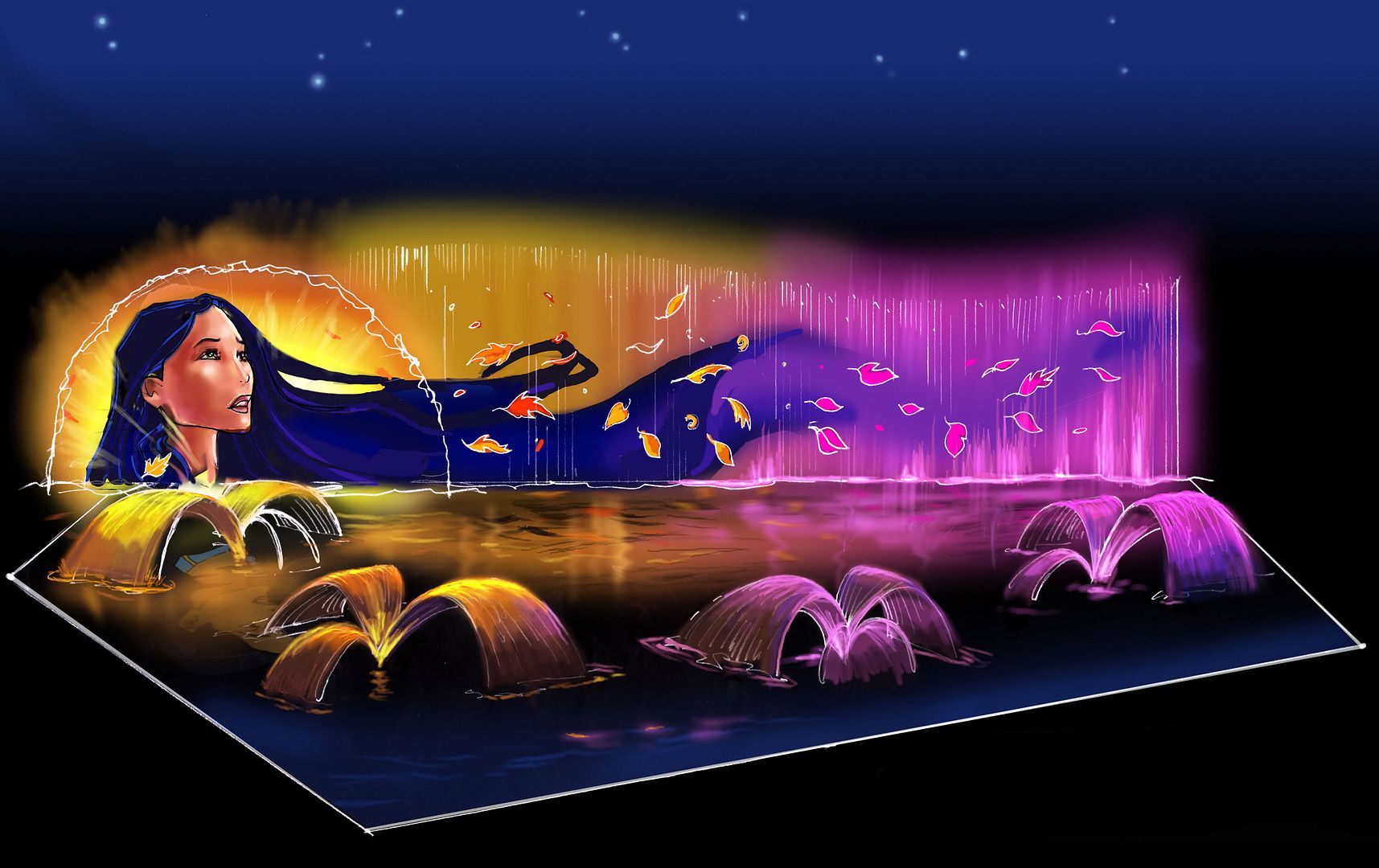
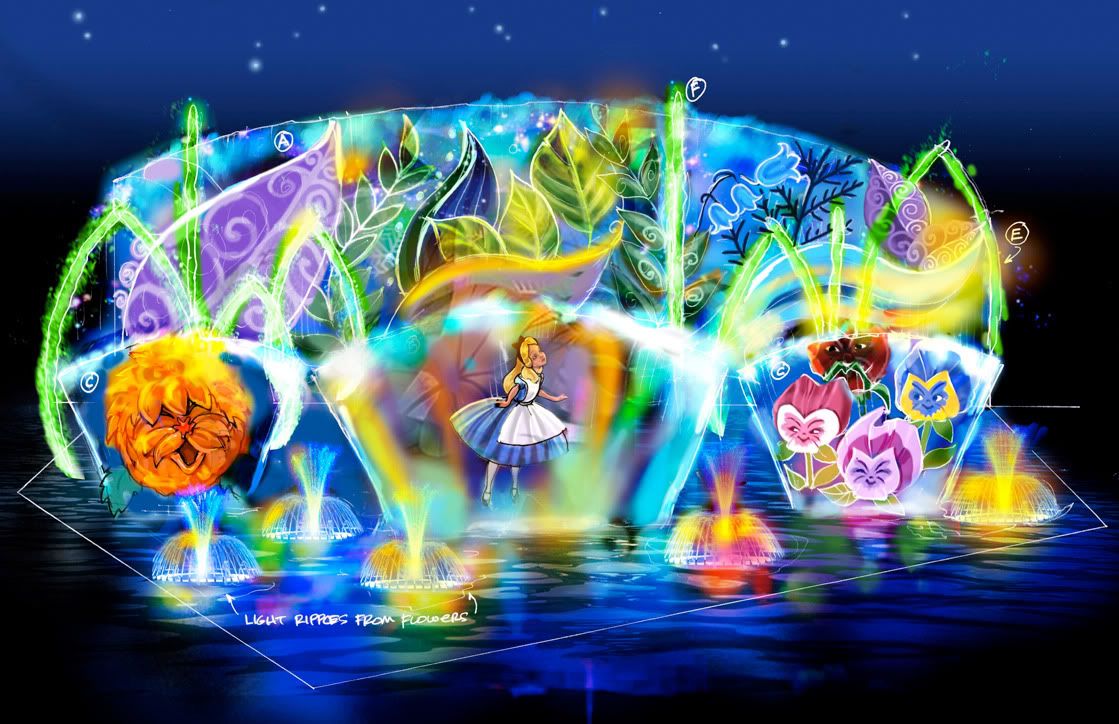
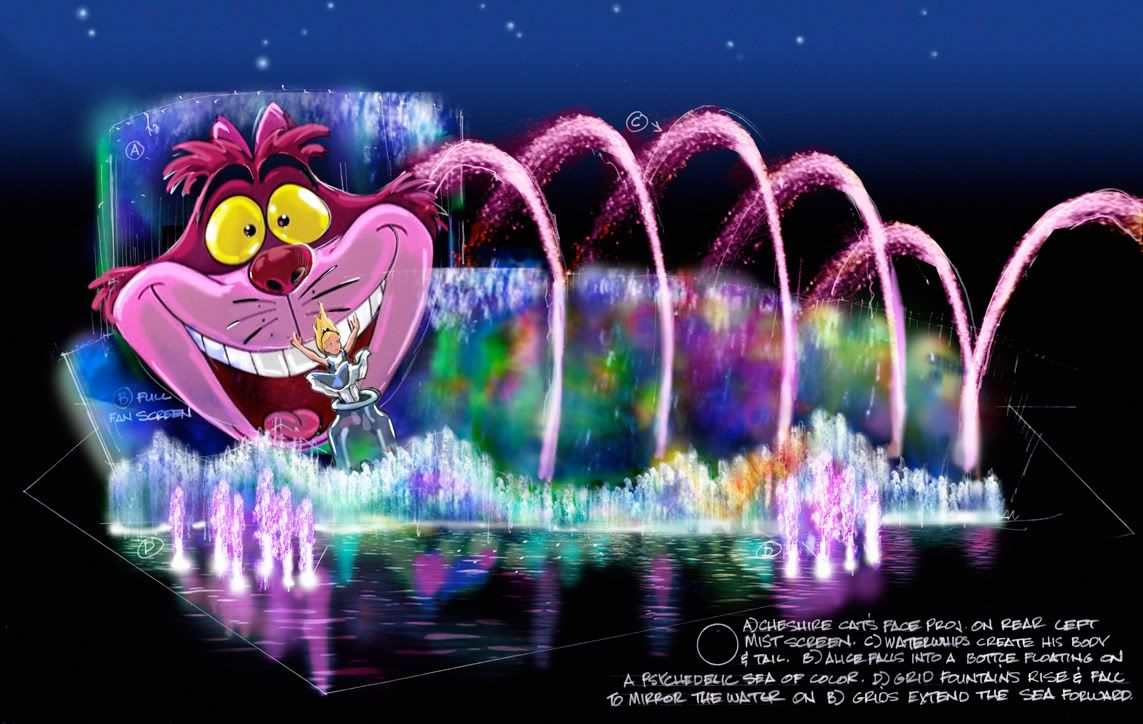
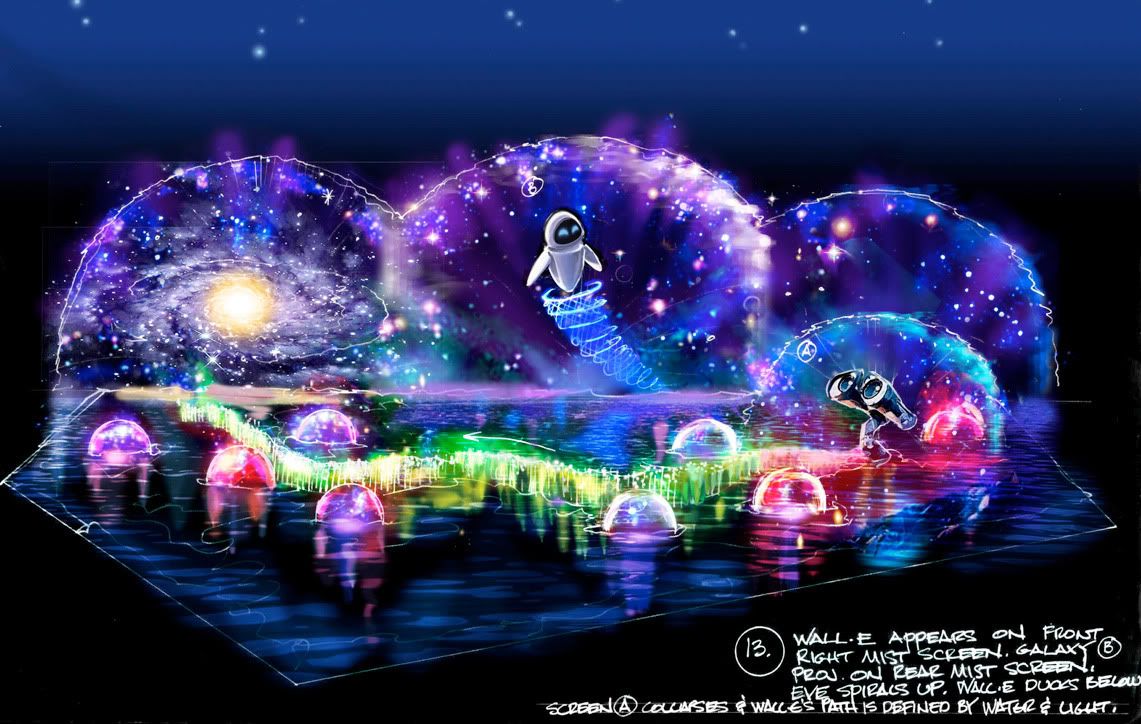
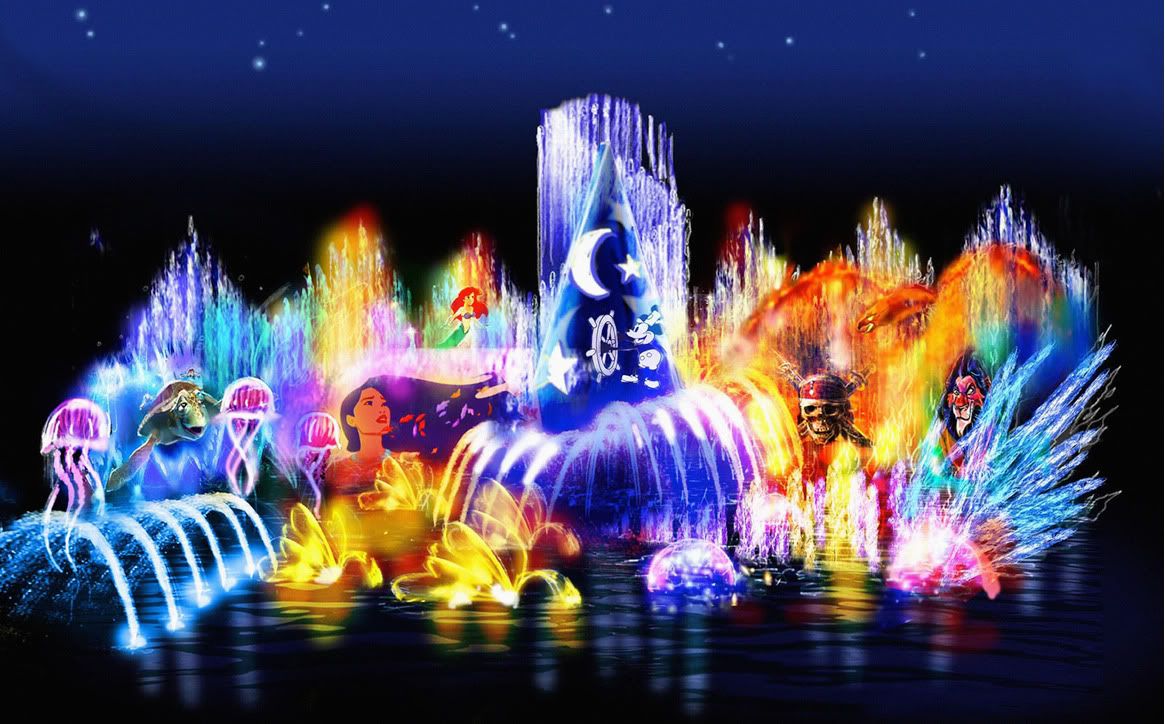
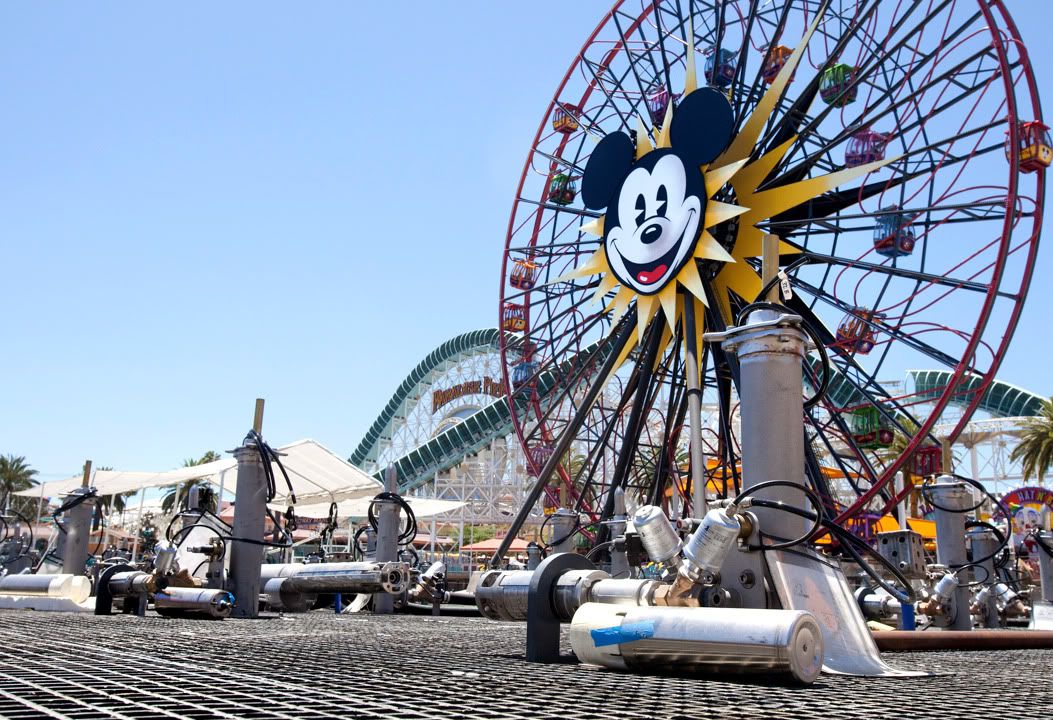
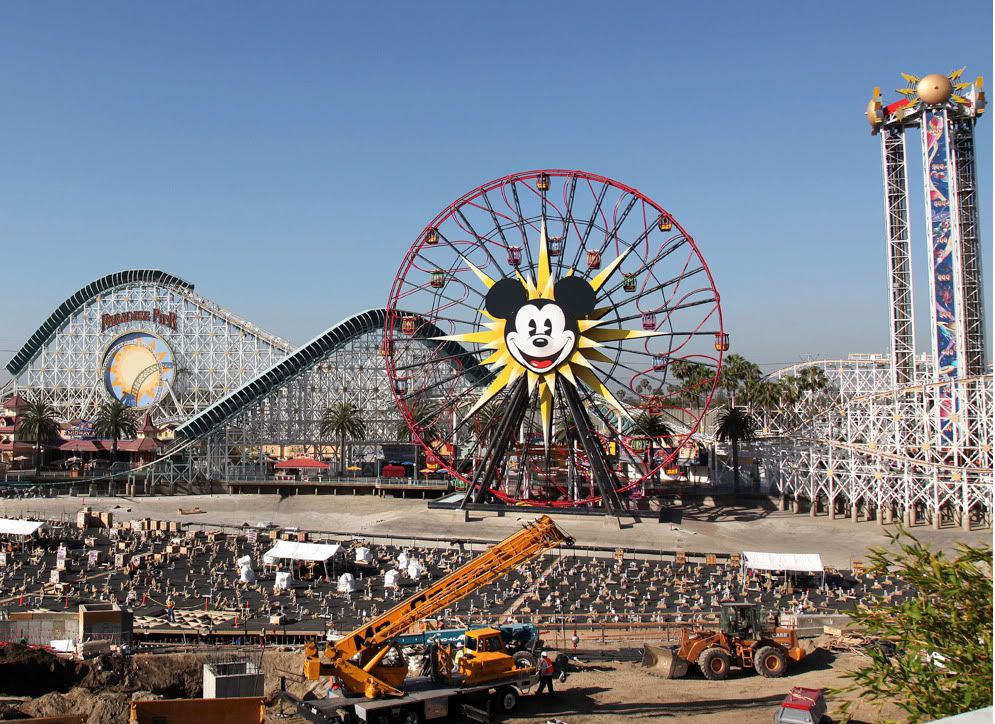
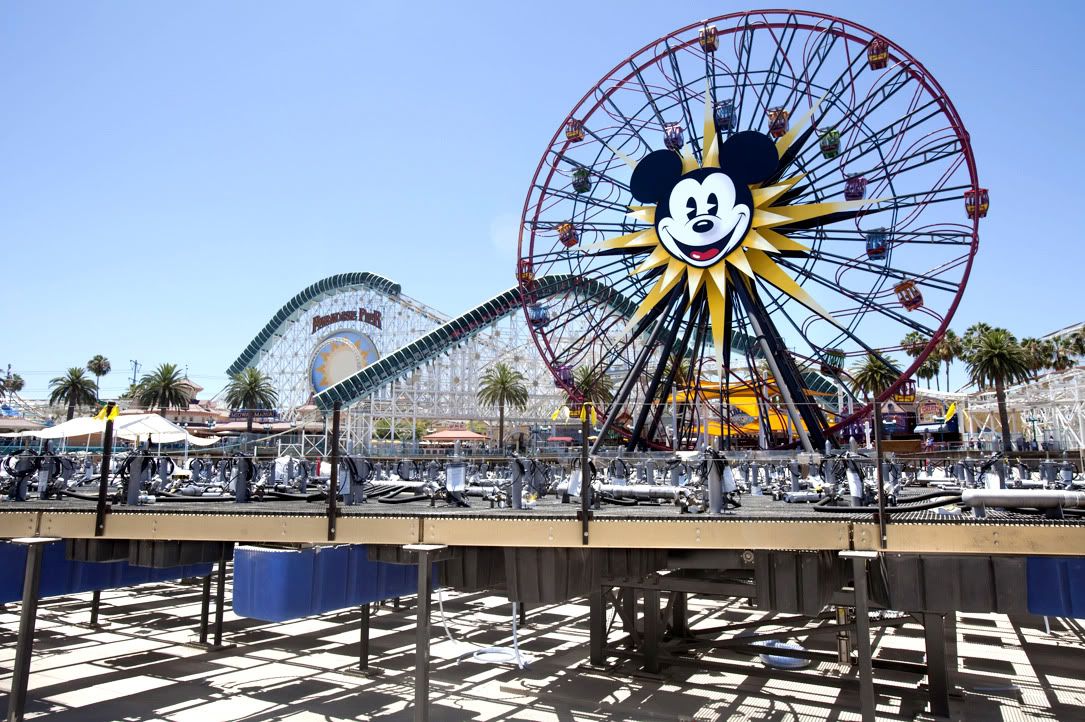
The pictures were released last week-end, but i was doing my "Man on the Moon" celebration and couldn't post them before. Anyway, better too late than never and here is great artwork for the awaited "World of Color" show at DCA. As always, click on each picture to see them in big size.
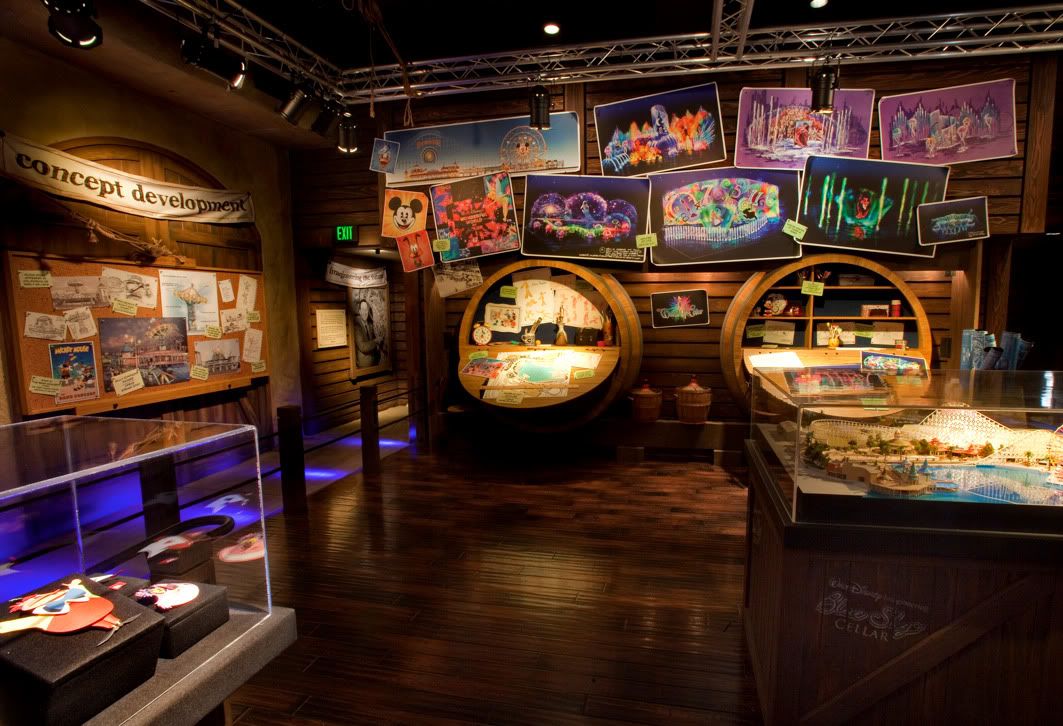
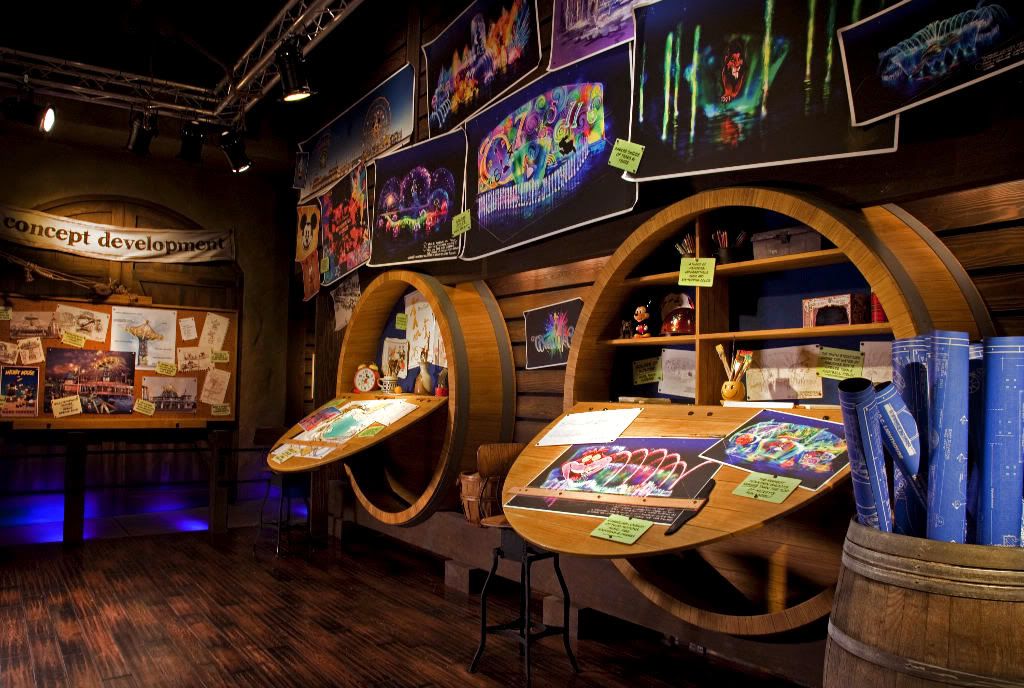
First, some pictures of the Blue Sky Cellar preview center.
Here is the artwork for the Pocahontas scene...
...And two artworks for Alice in Wonderland scenes.
The artwork for the Wall-E scene...
and the one - if i'm not wrong - for the final scene.
Disneyland also released a picture of the model showing where will be all the fountains...
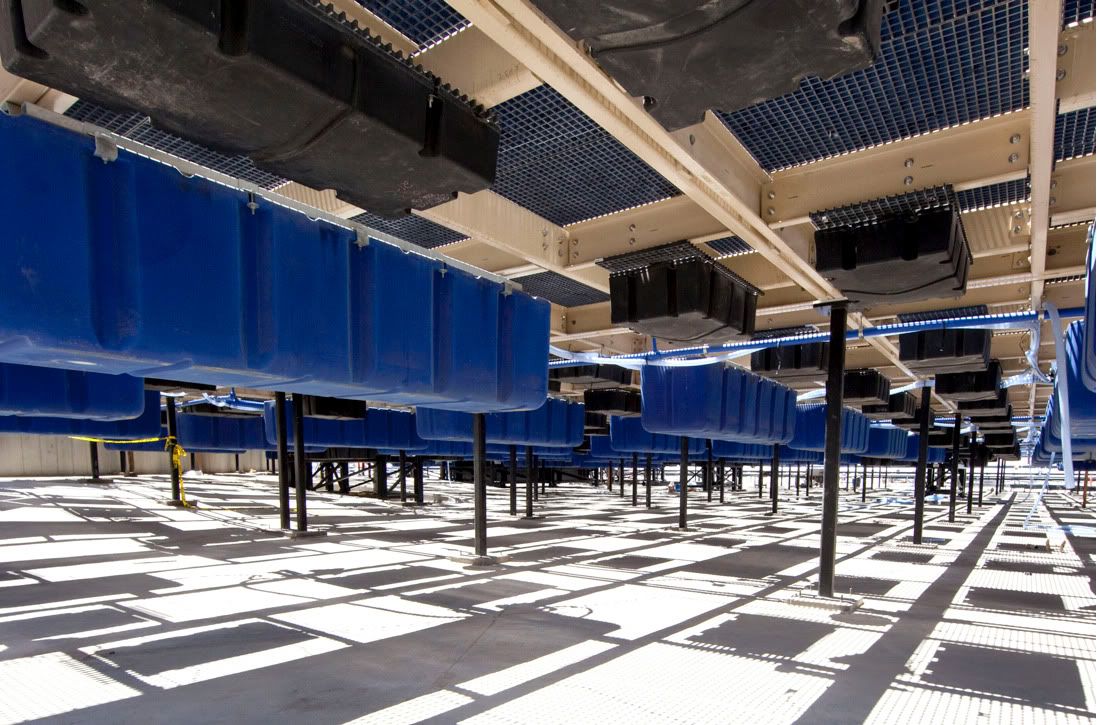
...as well as pictures of the construction inside Paradise Pier Lagoon.
I'm re-posting here the video - filmed by the always excellent MintCrocodile - that visitors of Blue Sky Cellar can see and learn more about the upcoming show.
Disneyland also posted on Youtube a behind the scenes video of the construction in DCA's lagoon!
But the not-to-be-missed video is the presentation that Steven Davison, creator of the show, did last week. Not only you will learn a lot about the show itself, but if you want to see somebody who have a real VISION, then look closely at Steven Davison. Thanks God, "Lightsofwinter" had the genius idea to film Steven's presentation, and here it is in three parts.
Pictures and artwork: copyright Disney
Videos: copyright Disney, MintCrocodile and Lightsofwinter
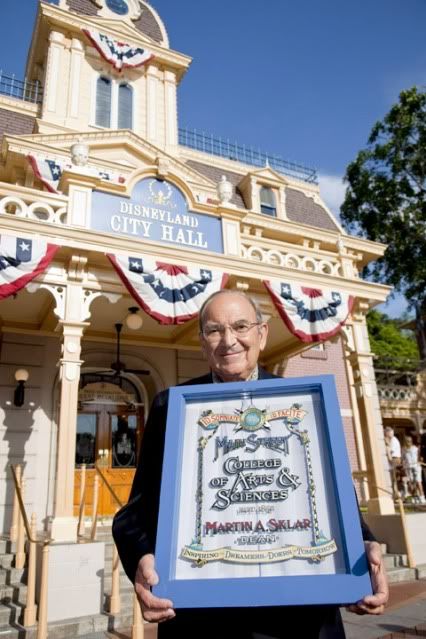
Last friday, Marty Sklar received his "window" on Main Street during a ceremony in tribute to his WDI career. You saw images of it and the WDI party in my exclusive report last week-end, but Disneyland just released a video of the DL ceremony, and here it is below.
We will have a look today to Disney's attractions in relation with travel in outer space. "Mission to Mars" now a Disneyland and Walt Disney World extinct attraction was located in Tomorrowland. The show was originally named Flight to the Moon and as we know it opened in 1955. In 1975, the destination was changed to Mars because man had already been to the moon. During that time, the attraction was considerably updated.
The show was initially sponsored by McDonnell-Douglas. After sponsorship ended, logos referring to the company were removed from the attraction, but the outline of the stylized tail fin in the McDonnell-Douglas logo still remains part of the former building's facade as you can see on this short Youtube video showing Mission to Mars entrance at night.
The show was designed in cooperation with NASA and was basically a revised and updated version of the previous attraction Flight to the Moon. Guests would now be launched on a spacecraft into space and then approach the surface of the red planet Mars.
Guests would first enter a viewing area known as Mission Control, which was modeled after a typical mission control center with chairs and control panels for about ten seated Audio-Animatronic "technicians" whose backs were to the audience as they moved their heads and arms. Facing the audience was the Audio-Animatronic flight director Mr. Johnson. He would then talk and show film clips to explain how man had made numerous advances in space travel and manufacturing in microgravity, and also learned how to deal with the effects of space. The lecture was interrupted once per show by an intruder alarm caused by a large bird crash-landing near the spacecraft launch pad.
After the pre-show, guests would move on and finally board their spacecraft. Inside was a circular theater with stadium-like seating with circular flat screens on the ceiling and floor. During the mission, guests could look at the views from outside the spacecraft from either of these screens. There were also side screens that showed film clips or graphics.
"Third Officer Collins" was the tour guide, and discussed the mission as the spacecraft explored space and Mars. Eventually, the ship was damaged, possibly by a volcanic eruption, and the ship had to quickly head back to Earth. The seats in the attraction would simulate the vibrations and G-forces from "Hyper-space" during take-offs and landings by filling up with compressed air. Finally, the spacecraft landed safely back on Earth and Officer Collins would then urge guests to return and visit again. As he explained, "there's a lot more to see on Mars".
The attraction closed at Disneyland on November 2, 1992, and at the Magic Kingdom on October 4, 1993. It re-opened as the ExtraTERRORestrial Alien Encounter as part of the Magic Kingdom's New Tomorrowland on June 20, 1995 but that's another story...
Below two videos of Mission to Mars, the first one shows the pre-show with Mission Control room and the second one the show itself. Please note that the show was quite dark, so...
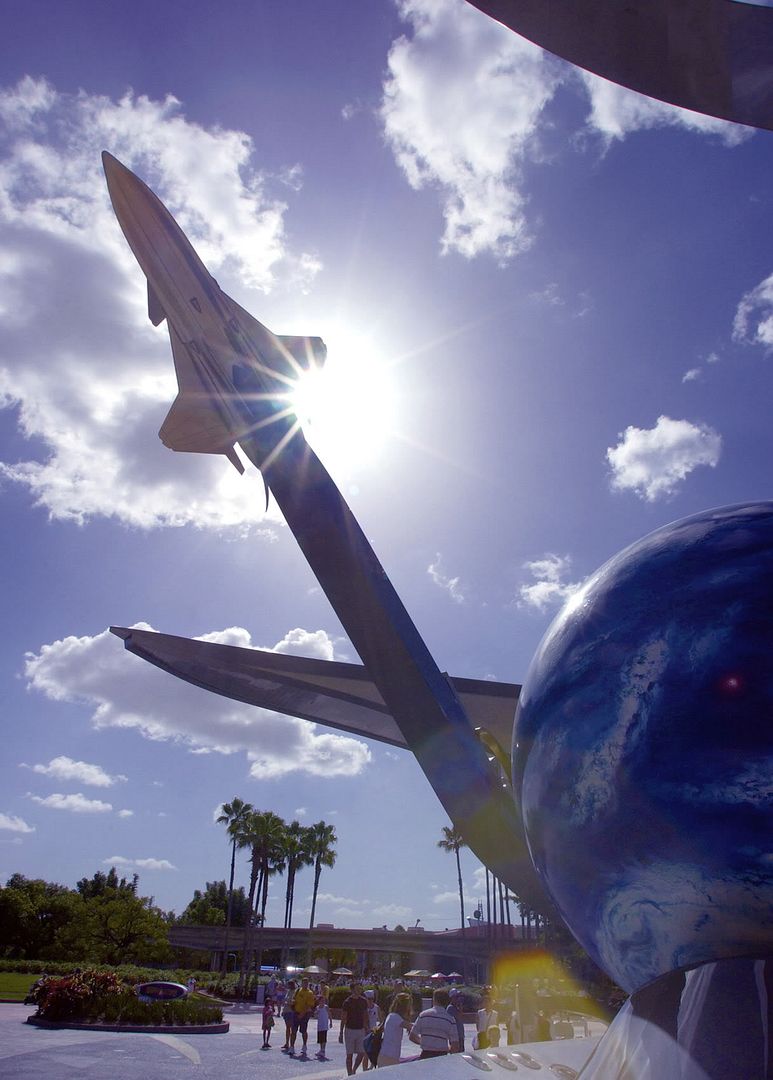
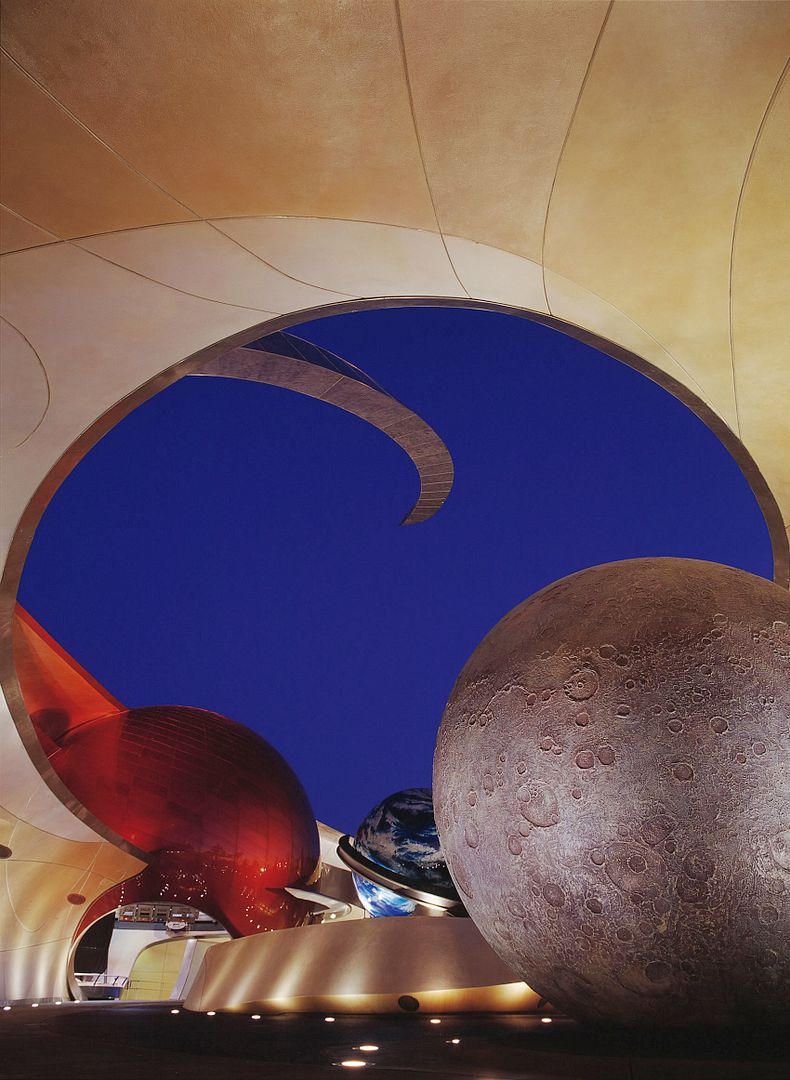
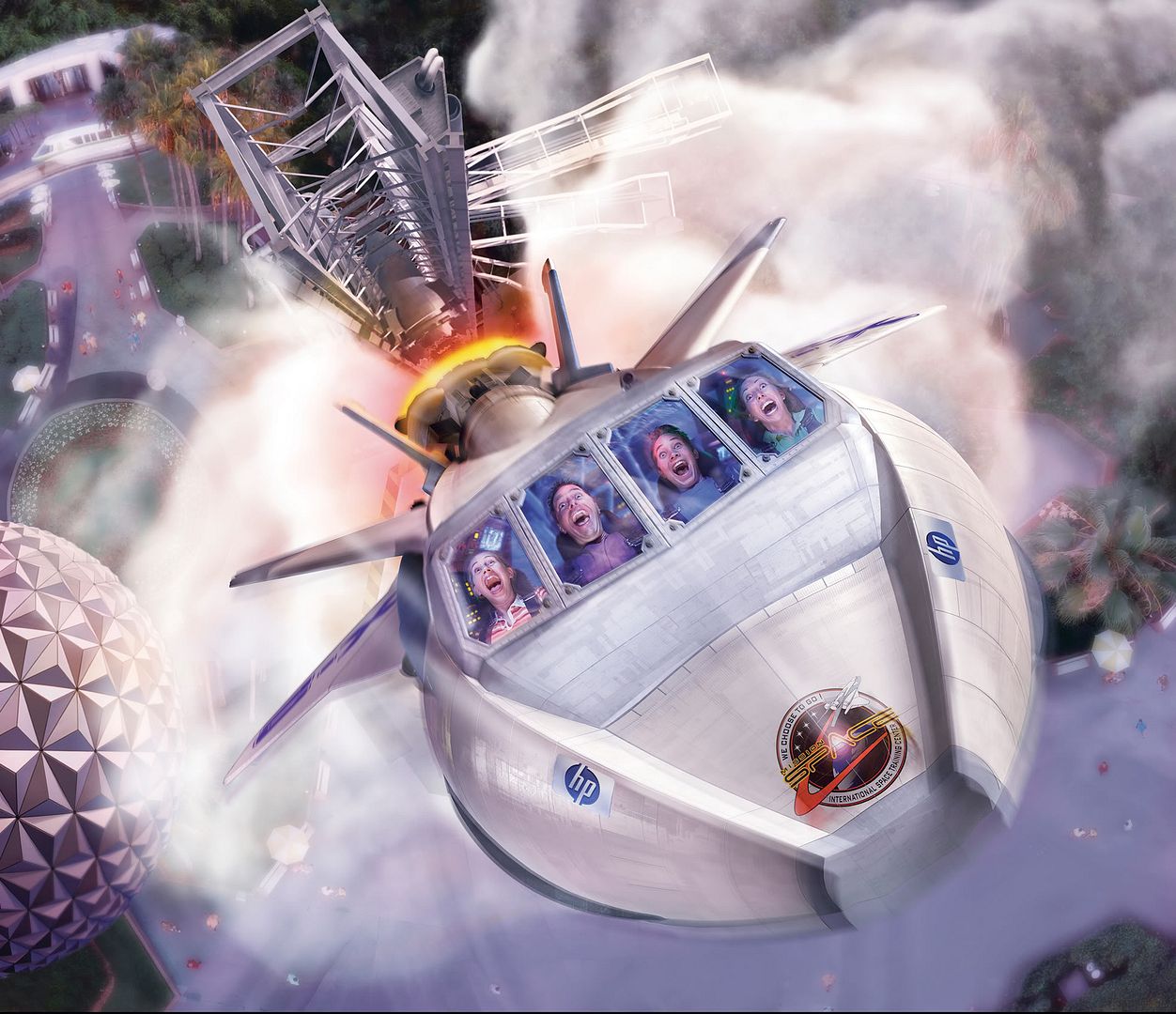
Ten years later, another "mission" will take WDW guests on Mars, and it was at Epcot when "Mission: Space" opened on October 9, 2003. Well, as a matter of fact, what opened was the first part of a much better "Mission: Space" attraction concept.
In its first concept part one of the attraction was the same one that Epcot guests can ride every day, i.e the shuttle centrifuge-simulator of a blast-off to outer space.
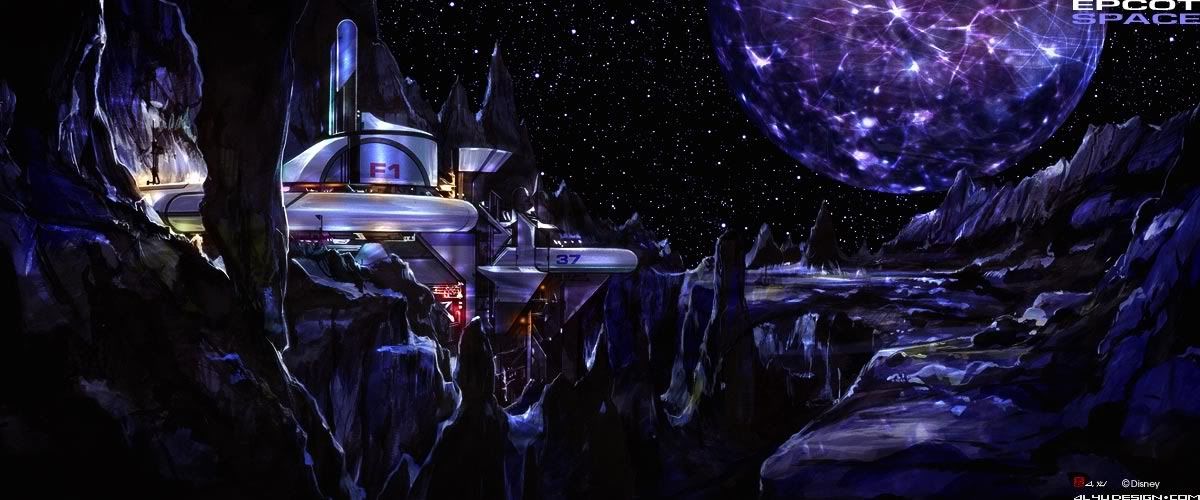
But instead to go on Mars, the original concept would have sent Mission: Space guests to a Space Station built on the Moon - or, according to Jim Hill in his excellent 2001 article, on a huge asteroid.
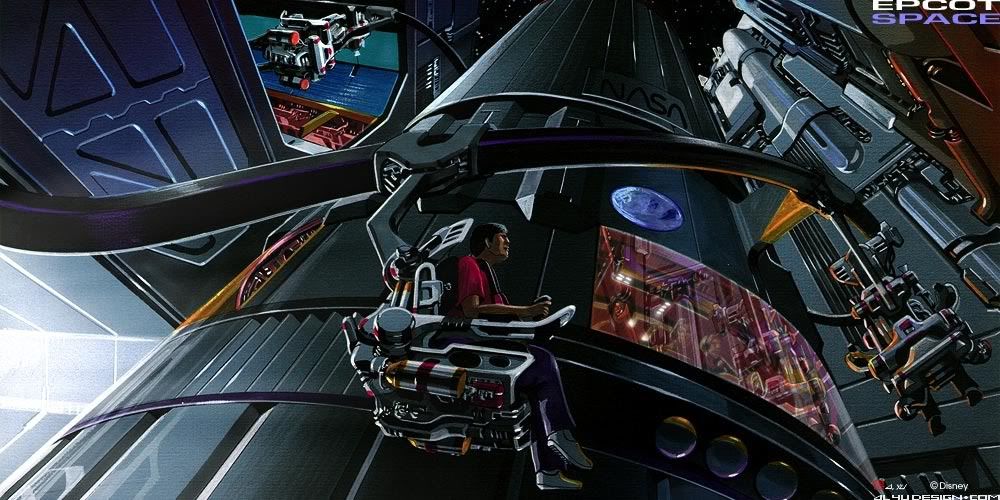
Always according to Jim "After they've arrived at the station, Epcot visitors will be free to disembark and discover the many wonders that are hidden deep inside that asteroid". And how, you ask? Well, that was the third genius part of the ride as Guests would have been able to move inside the Space Station thanks to a simulation of "MMU" - Manned Maneuvering Unit - the famous propulsion backpack which was used by NASA astronauts on three space shuttle missions in 1984 and which allowed the astronauts to perform untethered EVA spacewalks at a distance from the shuttle. Of course, as you can see on the rendering below, every one was supposed to follow the track, but the ride would have been great anyway, don't you think so?
Of course the cost of the whole attraction was extremely high, and too high probably for Michael Eisner, Disney's CEO at that time. Only the first part of the ride was saved and Mission: Space was built on the former site of the beloved Horizons attraction.
Grand Opening happened on October 2003 and here is the video of the ceremony attended by Disney CEO Michael Eisner, HP CEO Carly Fiorina and NASA Administrator Sean O'Keefe, as well as several NASA astronauts from its many phases of human space exploration- Mercury, Gemini, Apollo, the space shuttle program and two crew members aboard the International Space Station!
The two next videos shows the attraction itself. The first one shows part of the pre-show as well as Mission Space Imagineers, and the second one was filmed during the ride itself, showing the whole movie one can see during the centrifuge ride.
This article ends my "Man on the Moon" celebration and tomorrow we'll be back to Earth!
It's the 40th Anniversary of the Man on the Moon and during the next three days Disney and more will do a special tribute to this memorable event. As this is a Disney fan site, we will have a look to the different Disney productions or attractions themed on the "space" theme.
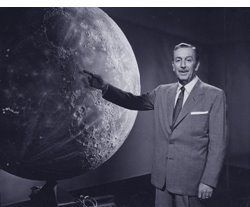
Today the first article is all about the great TV series aired in the 50's "Man and the Moon" and "Mars and beyond". These series were done with the help of future NASA scientists and Walt, always visionary, asked Wernher Von Braun - who will designed later the Saturn 5 rocket for the Apollo missions - what could be his vision of the future space travels. It's also thanks to the series that President Ike Eisenhower after a private screening became more interested in the conquest of space, and then launched the space program...which finally will send a man on the moon!
What is less known is that genius movie director Stanley Kubrick took a lot of inspiration out of these series when he did ten years later his legendary "2001, A Space Odyssey" movie. Kubrick even paid a tribute to Disney animator Ward Kimball Director of the TV series. In the second part of "2001" some astronauts are sleeping "frozen" in a kind of sarcophagus during the long trip of the spaceship Discovery. And the name of one of them - written on the cryogenic coffin - is "Kimball", a tribute of Kubrick to Ward Kimball.
To come back to the TV series, Man and the Moon begin with a humorous look with Man's fascination with the Moon through animation. This segment features the Moon's usage in everything from William Shakespeare and children's nursery rhymes to lunar superstitions and scientific research. Then Ward Kimball comes on with some information on the moon, supplemented by graphics. Kimball then introduces Wernher Von Braun, who discusses plans for a trip around the moon. Finally, a live action simulation from inside and outside the manned Lunar Reconn Ship RM-1 dramatizes what such an expedition might be like, including an almost-disastrous hit by a very small meteor.
Here is some artwork from the "Man in Space" animated series.
Wernher Von Braun - the creator of the Apollo rockets - employed as technical consultant, is here with Walt. Von Braun is the first on the left on the picture below.
Von Braun - who was a man who knew what the word rocket means as he worked on the german V2 project during world war 2 - helped to design some of the amazing spaceship that you will see on the videos below.
Here is Walt and Wernher Von Braun again with models used for the show.
Ward Kimball, Disney's famous animator and WED imagineer is here with Walt and one of the model of the spaceship to Mars.
Thanks to the Youtube links below you'll be able to see the whole show, and here is the first one "Man and the Moon".
Two years later, "Mars and beyond" was aired on December 4, 1957. Always directed by Ward Kimball and narrated by Paul Frees. This new episode discusses the possibility of life on other planets, especially Mars. It begins with an introduction of Walt Disney and his robot friend Garco, who provide a brief overview. It continues with an animated presentation about mankind seeking to understand the world in which he lives, first noticing patterns in the stars, and developing certain beliefs regarding the celestial bodies. Theories from scientists and philosophers are discussed, including Ptolemy's inaccurate, but formerly-accepted theories, as well as those of Copernicus. Life on other planets is considered, soon focusing on Mars. Ideas from science-fiction authors H.G. Wells and Edgar Rice Burroughs are brought to life with more colorful animation. Pulp science fiction comics of the time are parodied in the same straightforward tone as everything else (this segment features Kimball's comic tone and there's even a cameo appearance by Donald Duck).
After this, the program adopts a serious tone as it profiles each of the planets in the solar system, from the perspective of what would happen to a man on them. The program claims that whereas most of the planets are either too cold or too hot for life as we know it, life on Mars could almost be normal, something that is of increasing importance for the future. Dr. E.C. Slipher then discusses the Red Planet and the possibility that life is already there. More animation speculates what the conditions on Mars might be like. This section is filled with striking, inventive and decidedly atypical Disney animation.
Above: Animator Julius Svendsen with Ward Kimball and models designed for the show. Below: Wernher Von Braun, technical consultant on the series, with the same model.
The program wraps up with what a trip to Mars would entail for a space crew and its vessels. Contributor/spacecraft designer Ernst Stuhlinger - on the picture below with Von Braun holding a model used for the show - presents his design and details regarding a unique umbrella-shaped MarsShip: The top portion would be a revolving outer quarters ring providing artificial gravity for the crew of 20, under 'parasol' coolant tubes. At the other end would be a sodium-potassium reactor to provide power to the midsection electric/ion drive. Attached upright would be a chemically-fueled winged tail-lander. The mission shown involves six MarsShips, ultimately reaching 100,000 mph, taking a 400 day, spiral course to Mars. There, they would spend 412 days on the surface before returning.
I will end this article with the full "Mars and beyond" episode. If you don't have a lot of time, jump to the last two parts, the most interesting one.
Thanks to leave a comment or discuss this interview on D&M english forum on Mice Chat
Photos and videos: copyright Disney
You can find the complete series of the three Man in space 1950's tv shows which includes "Man in Space" , "Man and the Moon" and "Mars and Beyond" on the Disney treasures dvd set "Tomorrowland" at amazon.com.
On this new Disney and more section you will find the "Movies and Animation" articles. Enjoy this new section, all in dark blue and gold colours. Gold like all the Academy Awards that Walt Disney Animation Studios won in more than 70 years!